In a market where two-wheelers are bought on price and practicality, Vespa had to sell something price-conscious consumers had never been asked to pay for: iconicity.
Vespa was re-entering the Indian market after a long absence — into a two-wheeler landscape dominated by value-for-money commuter brands. Vespa's price point was a significant premium. The audience was aspirational but value-conscious. The task: launch a brand that had no existing awareness and charge a premium for it.
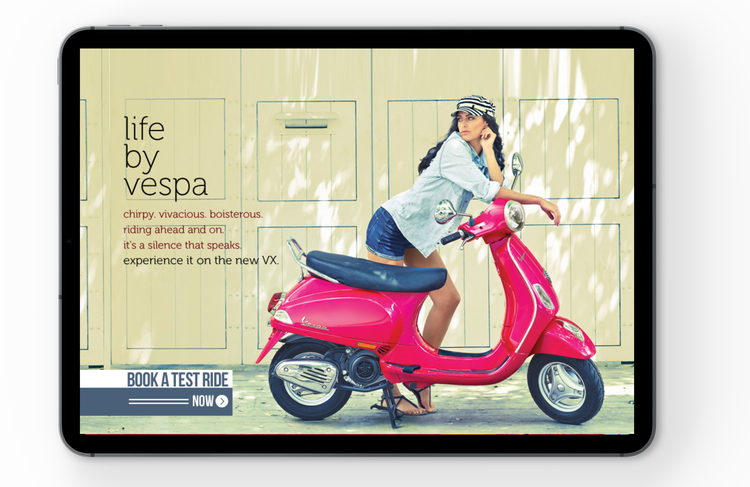
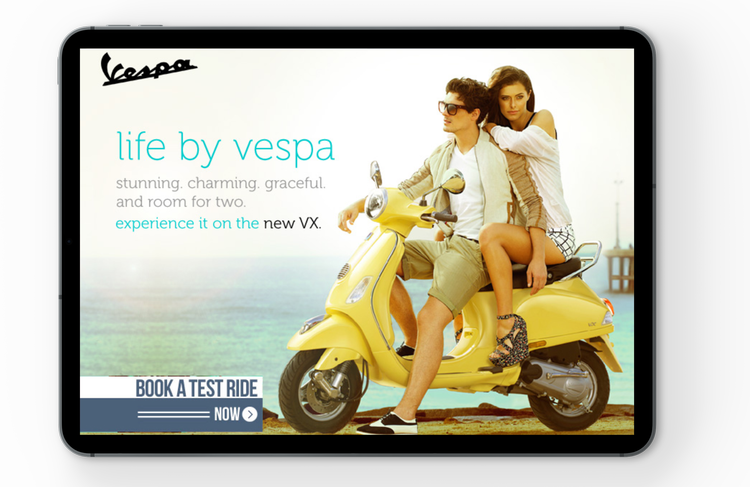
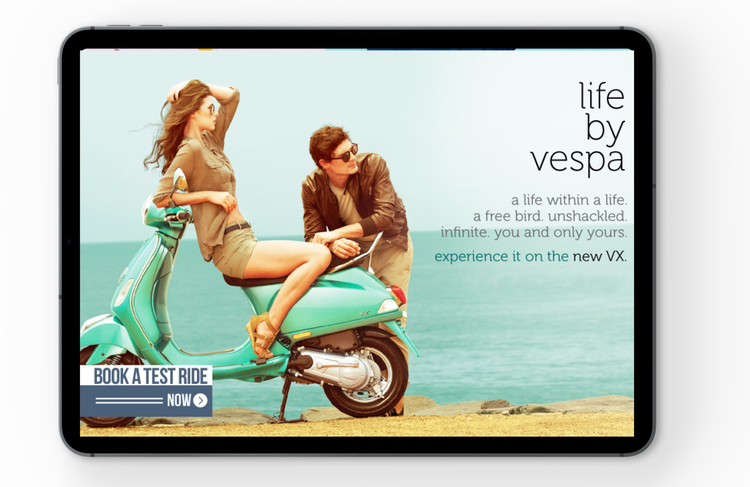
Two creative directors walked over to the digital team with some broad strokes about Vespa — heritage, Italian design, premium feel. The usual. My job was to make banners. I made the banners. But somewhere in that conversation one line crystallised everything: 'Stunning. Charming. Graceful. And room for two.'
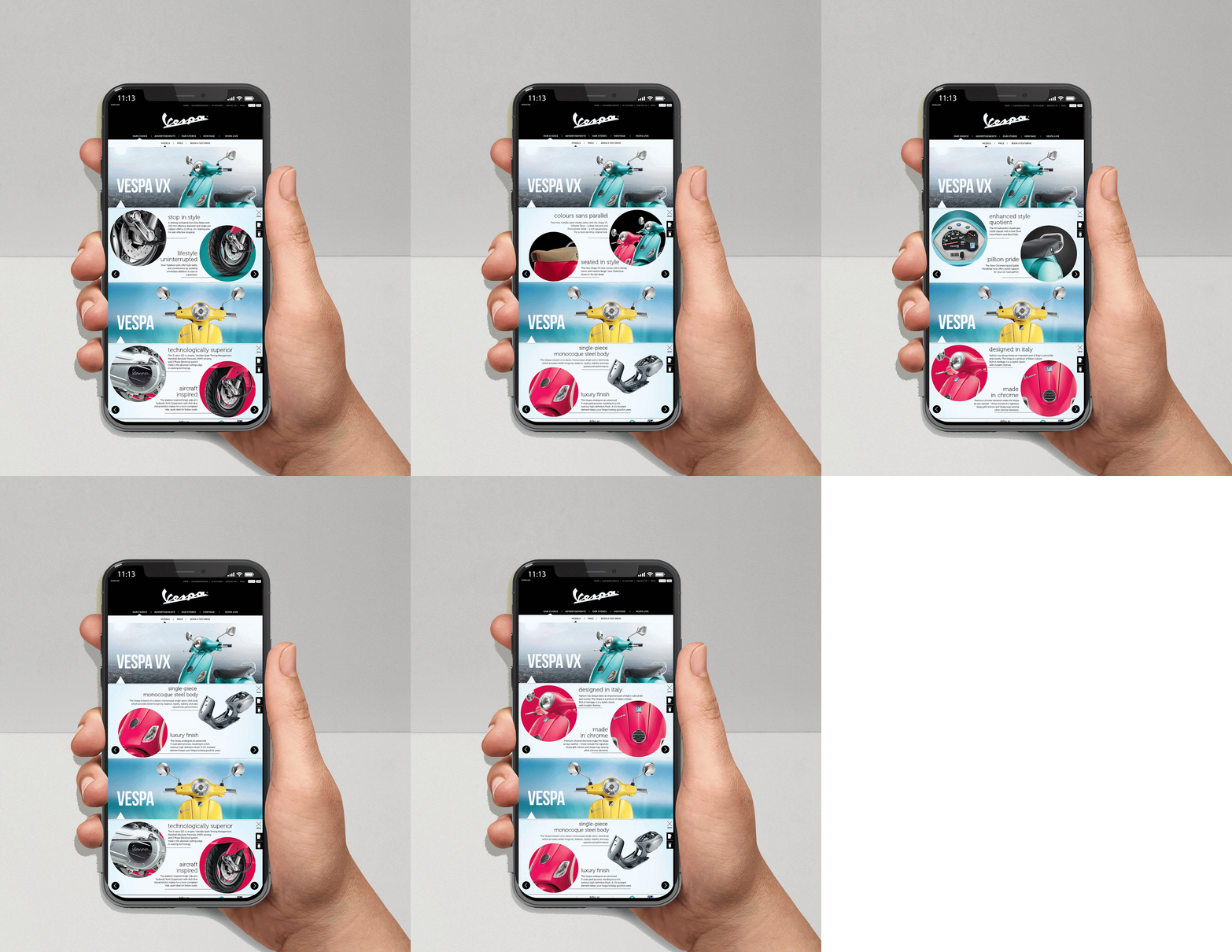
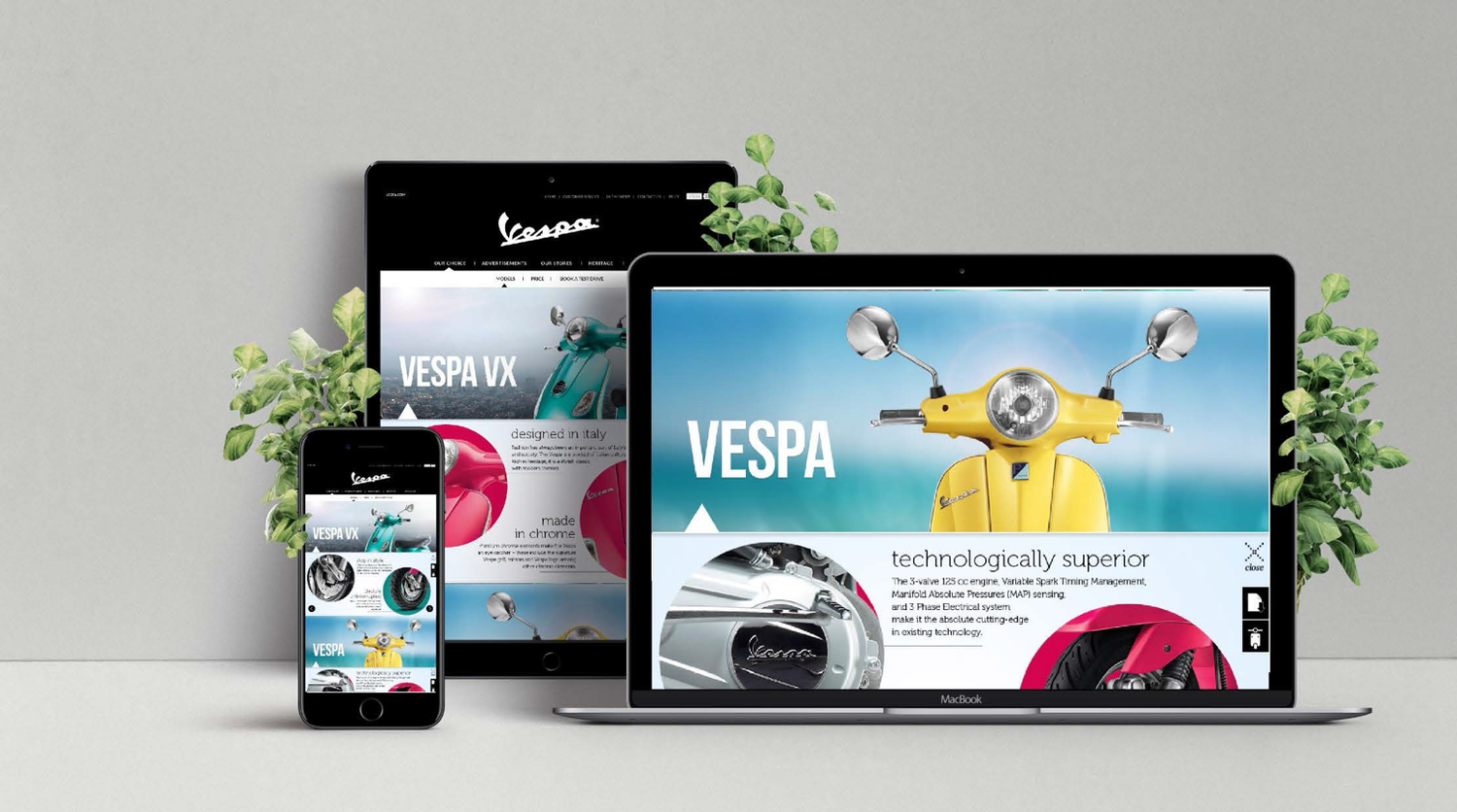
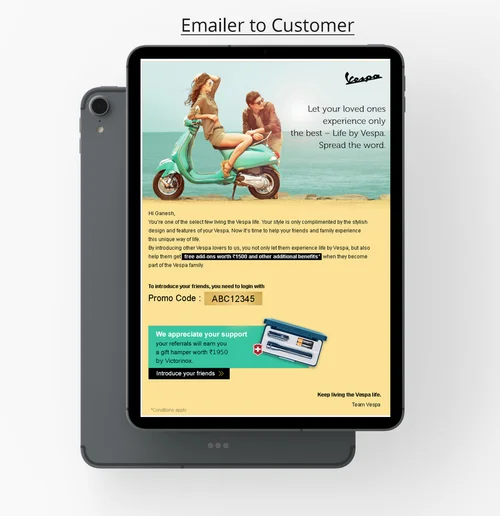
That wasn't a product description. That was a person. Someone you'd want to be, or want to be seen with. Once you see the brief that way you can't unsee it. Banners weren't enough. We pushed for a CRM campaign and a full website redesign — because a brand that makes you feel like that deserves more than a display ad.
The website ended up becoming Vespa's global template. Not bad for a brief that started as a casual conversation.
A full brand ecosystem: redesigned website, digital campaign, and a CRM programme built to create desirability before the product was widely available. You cannot win a rational argument in a category that runs on rational arguments. Vespa's specs didn't justify the premium. Its heritage did.
Brand strategy, digital ecosystem, and CRM working in concert — each element designed to convert Vespa's premium barrier into a source of desirability.